
Suki Hana®
What Is Suki Hana?
Suki Hana is a franchise that features Japanese-style food, beverages and related products sold primarily in shopping mall food courts. Restaurants operate as counter-service units with no waitperson service and typically provide food court/communal seating. The business generates revenue principally from the sale of food and beverages through franchised, prototype-designed units that commonly occupy approximately 750 square feet in regional shopping centers or malls.
Suki Hana Franchise: Pros and Cons
This franchise boasts a spotless legal record with zero lawsuits, penalties, or terminations, and operator retention is so strong that no outlets have been reacquired. Its stability score ranks in the top 10% of all food and beverage franchises.
Pros
Cons
Sales / Revenue
What this means
Some franchisors choose not to make an Item 19 financial performance representation in the FDD.
Lawsuits & Legal Risk
Suki Hana reported no material legal proceedings,
Territory Protection
Suki Hana grants site-specific, non-exclusive operating rights rather than a protected exclusive territory; Development Agreements create non-exclusive development-area allocations. Territory rights are contingent on meeting performance quotas; franchisor retains rights to develop nearby units and to sell via alternative channels, including e-commerce.
Training & Support
Suki Hana provides a robust 120-hour training curriculum designed to prepare staff for launch; the initial franchise fee does not include training slots for any personnel. The program includes on-site launch assistance to support operational readiness, with franchisees responsible for travel and living expenses, and on-site support carries additional franchisor fees.
Franchisee Stability
Suki Hana earns an Excellent Stability Score. Three-year turnover of 0.00% is well below the typical Food & Beverage franchise (around 5.6%), indicating virtually no reported franchisee departures in the reported span. Out of 0 total exits, there were no terminations, no non-renewals, no franchisor buybacks, and no ceased operations.
The complete absence of exits over the three-year span suggests consistently retained operators among those reported, though the sample is small enough that broader patterns could shift as the brand grows. It remains sensible to speak with current operators to hear how the franchisor supports growth and to confirm early success stories. This is built on a compact track record (roughly 43 franchisees averaged across three years); continued retention as the system grows would solidify the picture. For prospective franchisees, the picture so far is uniformly clean: every franchisee who came in stayed in.
Unit Growth Analysis
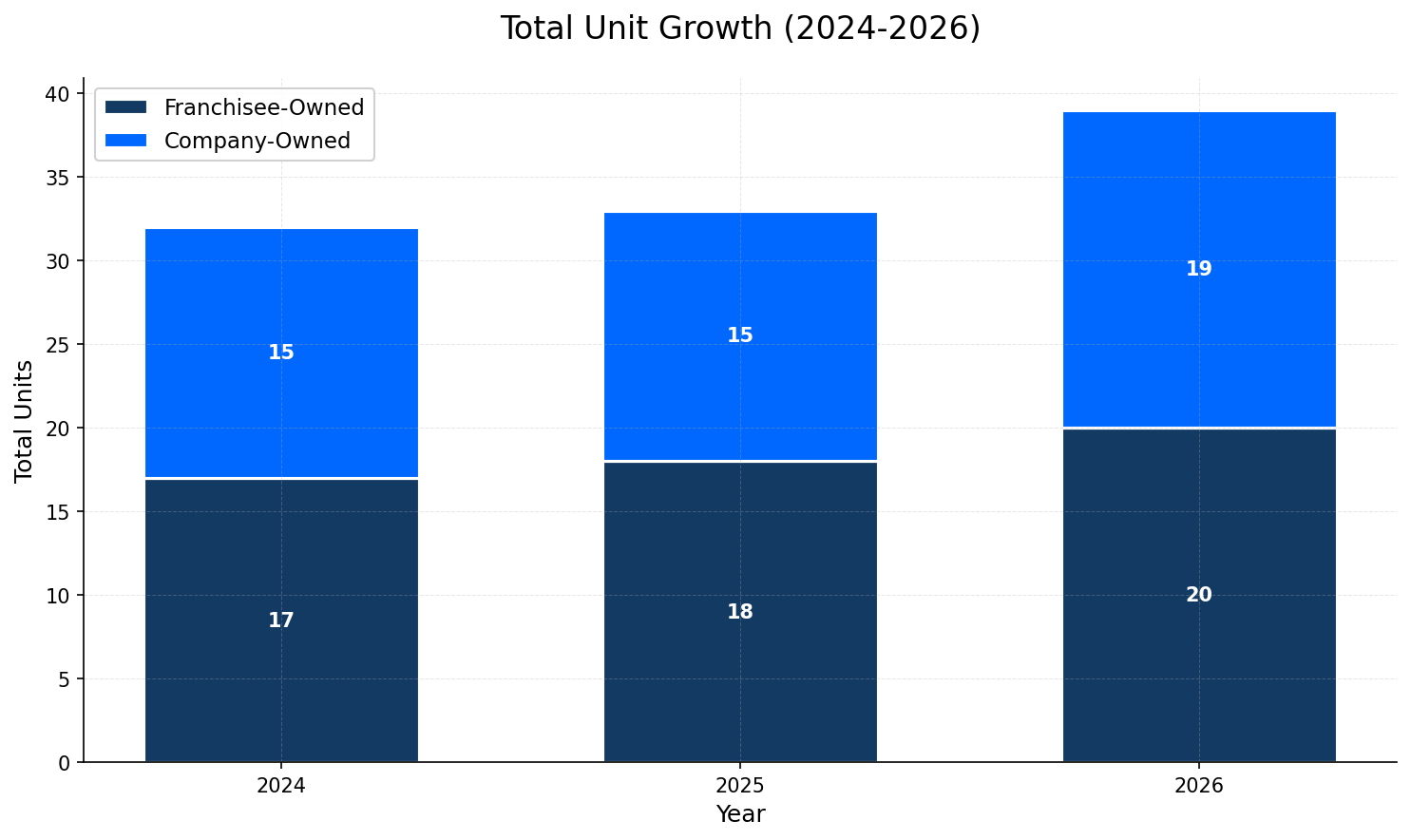
Suki Hana is growing - it reached 39 units and has been accelerating at about 18.2% year‑over‑year. This is a classic "Rocket Ship" situation: the expansion validates the concept but the nearly even split of 20 franchised vs. 19 company‑owned locations means corporate still controls many prime sites and rapid growth can strain training, field support and territory protections, so confirm support staffing, startup economics and exclusivity before you commit.
Frequently Asked Questions
Is Suki Hana a good franchise to own?
Whether Suki Hana is a good franchise depends on your goals, experience, and local market. Key factors from the 2026 FDD: Suki Hana operates 39 locations, received a legal risk score of 100/100, a training and support score of 76/100. The 2026 FDD does not include an Item 19 financial performance representation. Prospective franchisees should review the full Franchise Disclosure Document and conduct their own due diligence before making any investment decision.
How long does it take to break even with a Suki Hana franchise?
Break-even timelines for Suki Hana franchises are not disclosed in the 2026 Franchise Disclosure Document. Break-even periods vary significantly based on initial investment level, local market conditions, operating costs, and revenue ramp-up speed. Prospective franchisees should build a pro forma financial model using Item 7 cost estimates and, where available, Item 19 financial performance data from the FDD.
Is Suki Hana a franchise or a corporate-owned business?
As of the 2026 FDD, Suki Hana operates 20 franchised locations and 19 company-owned locations. Franchise opportunities are available through the franchisor's disclosure process.
Does Suki Hana disclose franchise revenue data?
The 2026 FDD does not include an Item 19 financial performance representation. Not all franchisors choose to make this disclosure.
Interested in Suki Hana?
Get more information and connect with the franchise directly.