Central Bark®
What Is Central Bark?
Central Bark is a franchise in the Pet Services category for branded, personalized canine care facilities. The franchise operates from physical Central Bark facilities (each run from a single “Location” within a designated territory) and is subject to zoning, kennel, licensing, and other facility-related regulations. It serves individual pet owners (B2C) and provides a core service bundle of dog daycare, overnight boarding, grooming, training, and an on-site specialty retail boutique for dog products.
Central Bark Franchise: Pros and Cons
The franchise shows strong operator durability with a stability score of 97 (top quarter for Pet Services) and an unusually clean legal record, but it carries high capital requirements with total potential investment up to $1,394,250 and maximum reserves of $120,000, both well above typical peers.
Pros
Cons
Sales / Revenue
Gross Sales reported for the franchised locations described in the FDD in the 2025 FDD.
What is included?
33 franchised CENTRAL BARK facilities open and operating throughout fiscal year 2024; 4 excluded
Source and calculation
The displayed figure is taken from the FDD disclosure for the franchised locations described in the FDD. Source table: Gross Sales of Sales Group During 2024 Fiscal Year.
Important limitations
gross sales is not the same as owner profit. It does not show all expenses, debt service, taxes, or cash taken home by an owner.
Lawsuits & Legal Risk
Central Bark reported no material legal proceedings,
Territory Protection
Central Bark grants a protected, non‑exclusive Designated Area (≈20,000 households) that bars other units while your franchise is active if you comply. The franchisor retains rights to sell via e‑commerce/alternative channels, develop nearby units without right of first refusal, and, for multi‑unit agreements, exclusivity is contingent on meeting performance/development quotas.
Training & Support
The brand provides a robust 94-hour training curriculum designed to prepare one staff member for launch. The program includes on-site launch support for operational readiness; on-site assistance incurs an additional fee, and franchisees are responsible for travel and lodging expenses.
Franchisee Stability
Central Bark earns an Excellent Stability Score. Three-year turnover of 0.94% is well below the typical franchise (around 6%), placing the system closer to the lowest-churn 10% of franchises rather than near industry medians, and doing so within the broad sample of 751 companies used for comparison. Out of 1 total exits across the three reported years, ceased operations dominated with 1, alongside no terminations, no non-renewals, and no franchisor buybacks.
The dominance of ceased operations suggests location-level economics: operators chose to close or individual locations underperformed, rather than franchisor-franchisee friction, which often signals issues with site selection or local demand. With about 38 franchised outlets in the most recent year, a single closure represents a noticeable share of exits and highlights the importance of local market fit, but it is not, by itself, evidence of systemic instability. For prospective franchisees, this is among the strongest retention profiles in franchising.
Unit Growth Analysis
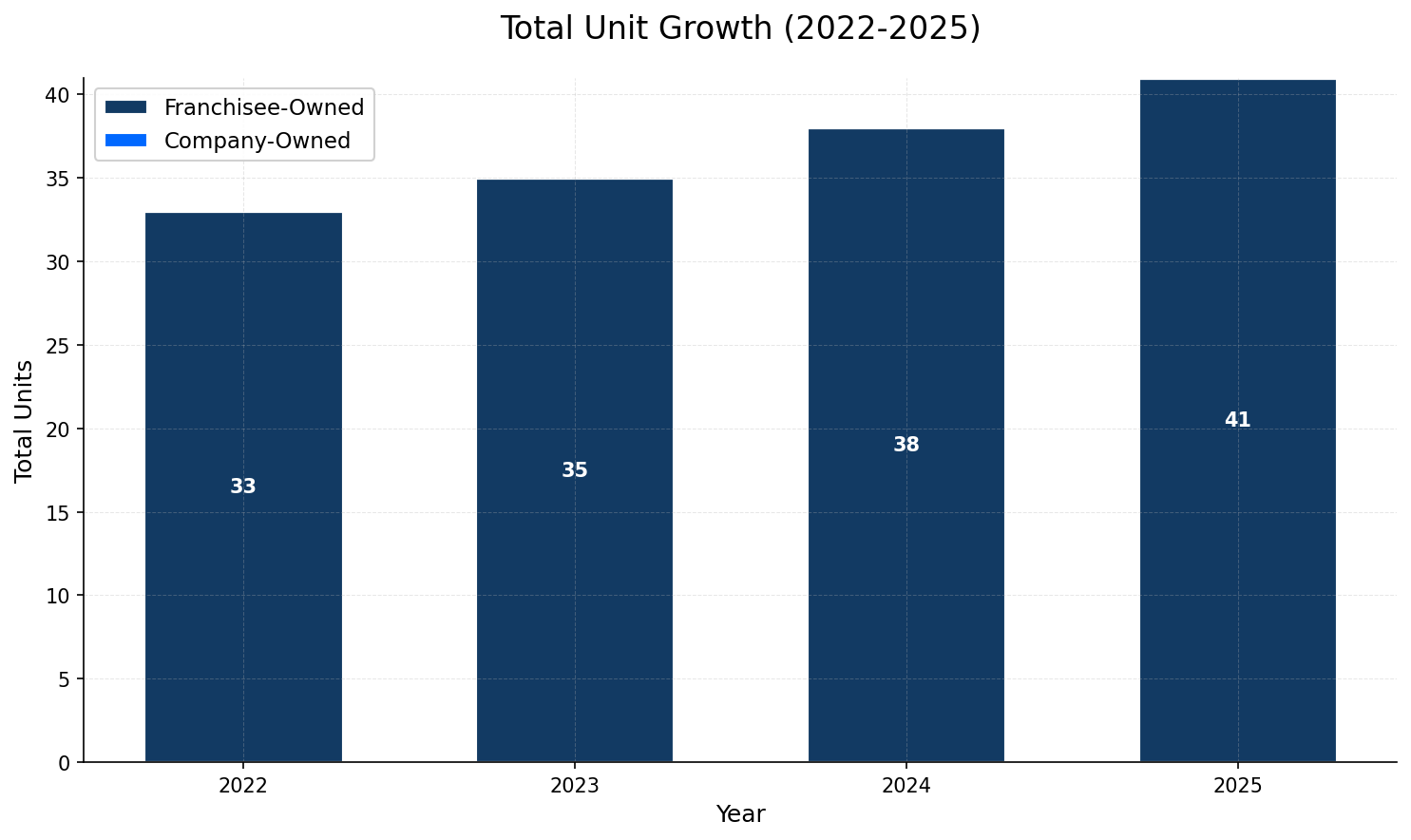
This franchise expanded from 33 units in 2022 to 41 in 2025 (CAGR ≈ 7.5%), with absolute additions of +2 (2023), +3 (2024) and +3 (2025), showing steady, modestly accelerating expansion rather than decline. For investors, the pattern-YoY growth rising from ≈6.1% (2023) to ≈8.6% (2024) and settling at 7.9% (2025)-signals healthy, sustainable scaling with consistent unit adds; the small dip from 8.6% to 7.9% is a minor stabilization around ~8% growth, not a material slowdown.
How Much Does It Cost to Open a Central Bark Franchise?
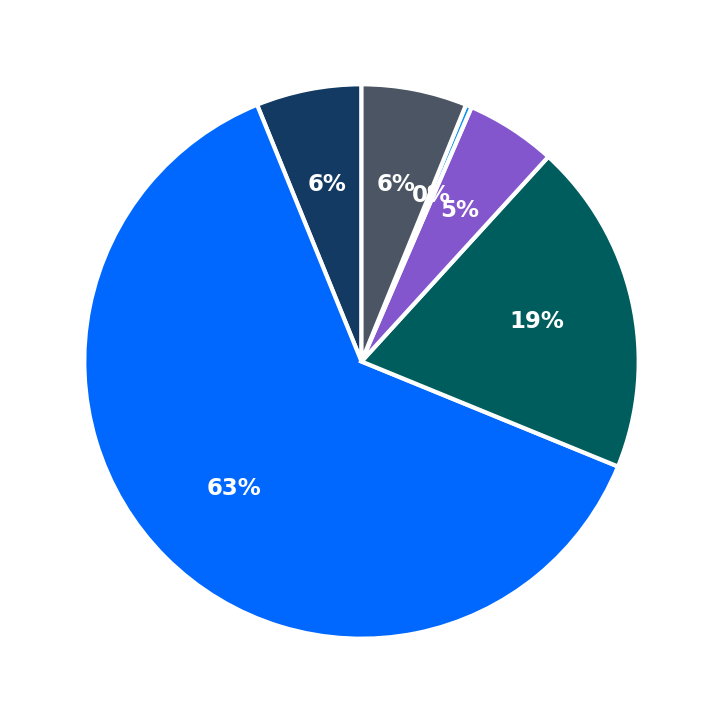
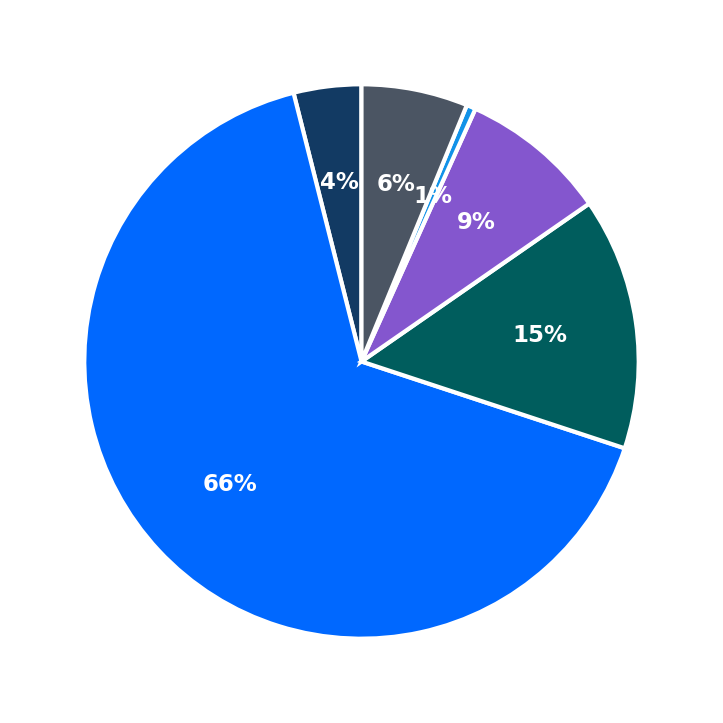
Opening a Central Bark franchise requires a total initial investment of $569,200 to $1,394,250, according to the 2025 Franchise Disclosure Document. This range covers the franchise fee, real estate, equipment, training, and initial working capital needed to launch and operate through the early months.
Minimum Investment
Maximum Investment
Minimum Investment Breakdown
Maximum Investment Breakdown
Investment Analysis
This investment analysis is coming soon. Have ideas for other analyses you'd like us to add? Get in touch.
The initial investment amounts shown are estimates only. Actual costs may vary based on location size, business model, and multi-unit ownership arrangements. We recommend reviewing the full Franchise Disclosure Document for complete details.
Frequently Asked Questions
Is Central Bark a good franchise to own?
Whether Central Bark is a good franchise depends on your goals, experience, and local market. Key factors from the 2025 FDD: Central Bark operates 41 locations, received a legal risk score of 100/100, a training and support score of 65/100. The FDD includes Item 19 financial performance data. Prospective franchisees should review the full Franchise Disclosure Document and conduct their own due diligence before making any investment decision.
Is a Central Bark franchise worth the investment?
The value of a Central Bark franchise investment depends on factors such as location, operator experience, and market demand. The initial investment ranges from $569,200 to $1,394,250. The 2025 FDD shows gross sales of $825,930 for the franchised locations described in the FDD. Franchise investments carry inherent risk, and prospective buyers should conduct thorough due diligence before committing capital.
How long does it take to break even with a Central Bark franchise?
Break-even timelines for Central Bark franchises are not disclosed in the 2025 Franchise Disclosure Document. Break-even periods vary significantly based on initial investment level, local market conditions, operating costs, and revenue ramp-up speed. Prospective franchisees should build a pro forma financial model using Item 7 cost estimates and, where available, Item 19 financial performance data from the FDD.
Is Central Bark a franchise or a corporate-owned business?
As of the 2025 FDD, Central Bark operates 41 franchised locations and 0 company-owned locations. Franchise opportunities are available through the franchisor's disclosure process.
Interested in Central Bark?
Get more information and connect with the franchise directly.